Mission Great Pacific Garbage Patch “Il Continente delle plastiche” english version below
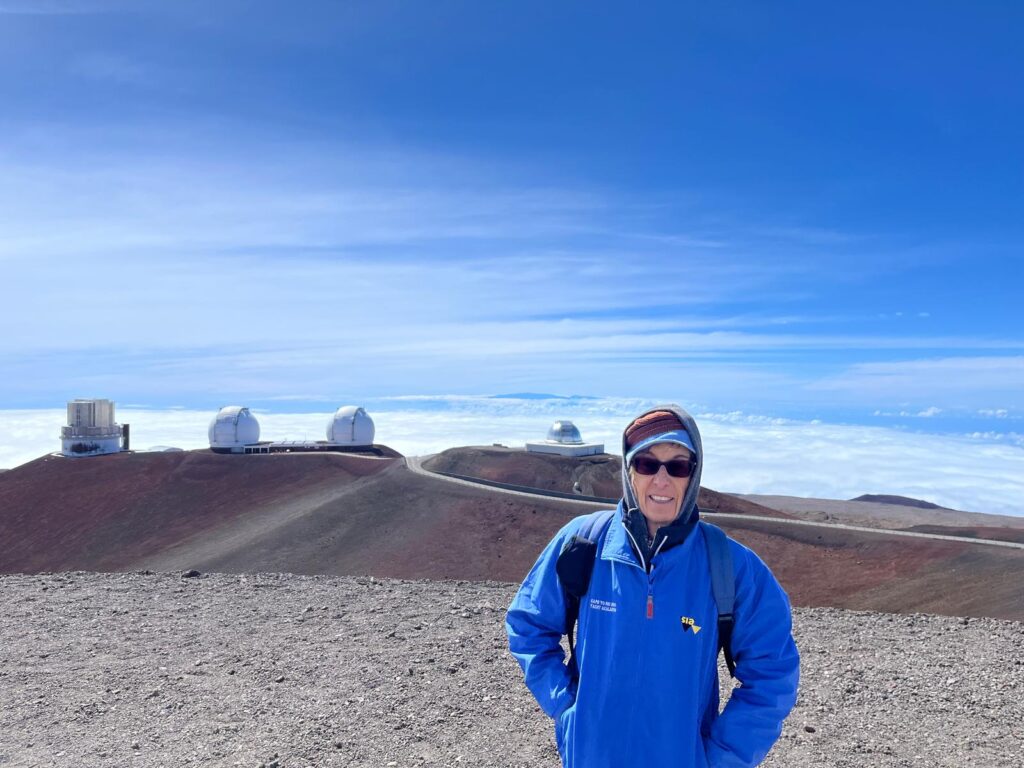
La traversata Isole Marchesi Hawai, anche nella seconda fase è stata, sotto l’aspetto velico eolico eccezionale, 2100 miglia in 12, 5 giorni, a più di 7 nodi di media, ed un solo tonno pescato. L’arrivo all’isola grande Hilo la terra dei vulcani è stato accolto da una fontana di lava alta più di 100 mt, anche se noi abbiamo visto solo il bagliore nella notte, nei giorni successivi con anche Michela ci ha mostrato le sue meraviglie, top i 4300 mt sul livello del mare del Mana Kea (photo1) ed il super attivo Kila Uea. Poi passaggi ad Honolulu via Maui e Malokai.
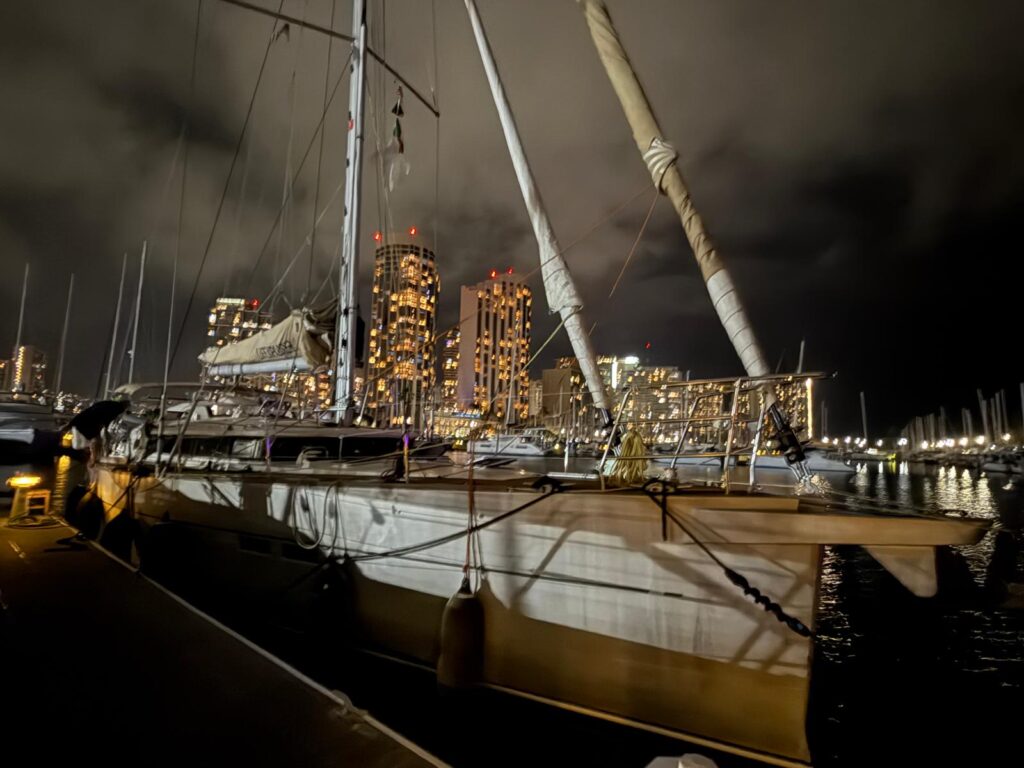
Il Waikiki yacht club, in Honolulu downtown (photo 2), ci ha ospitato per 10 giorni di riparazioni e manutenzioni per la preparazione della Hawai-Aleutine il più importante tratto per la nostra missione https://www.oceaneye.ch/en/ , con un solo giorno di “vacanza” a Pearl Harbour ed i suoi memorial.
Il 18 giugno si parte, prossima fermata Sand Point isole Aleutine (Alaska), circa 2200 miglia a Nord, meteorologicamente distinta in 3 parti:
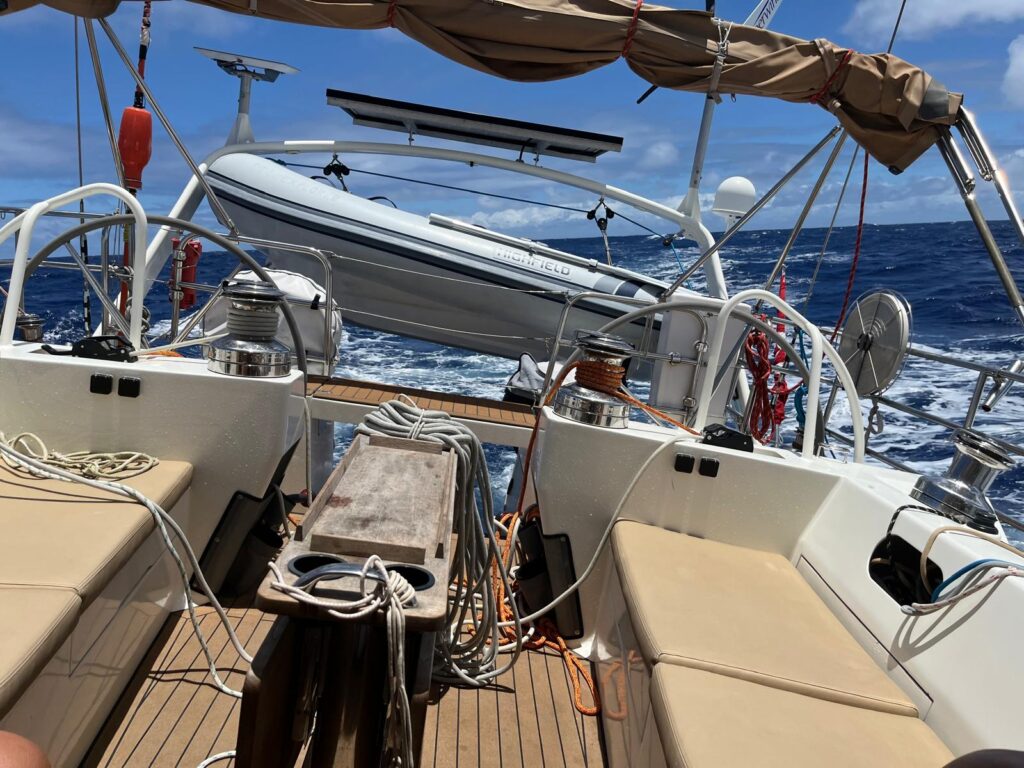
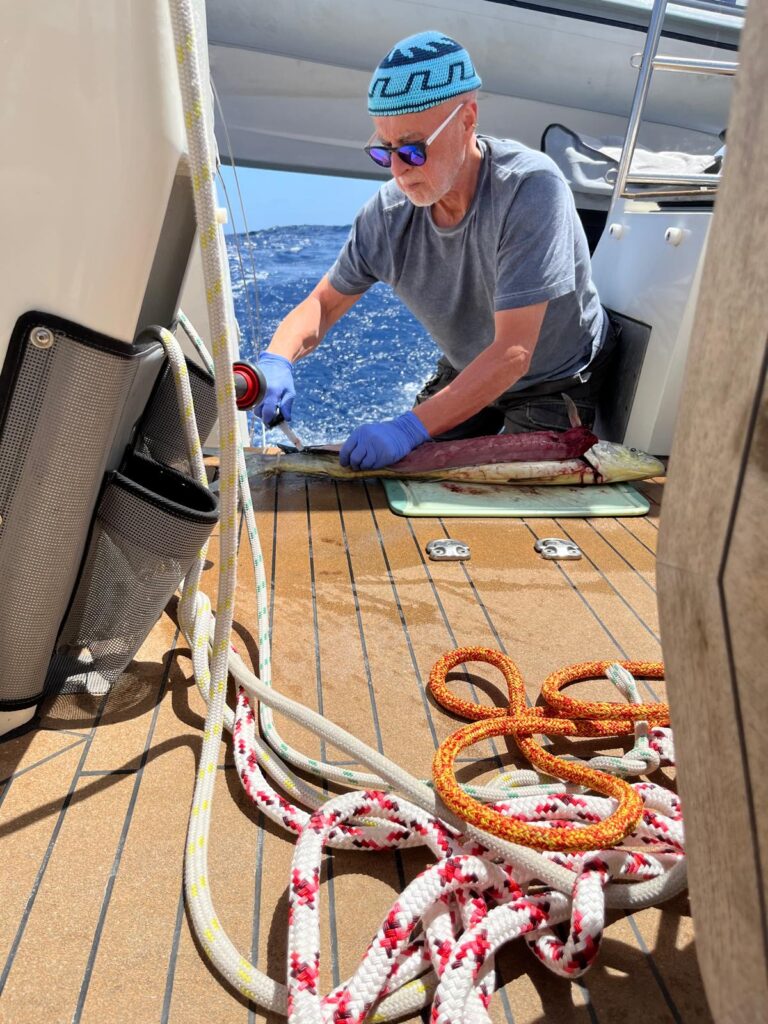
- Partenza lasco stretto con un ottimo aliseo alla fine del quale la cattura di un buon Mahi Mahi ha allietato la ciurma. (photo 3 -4)
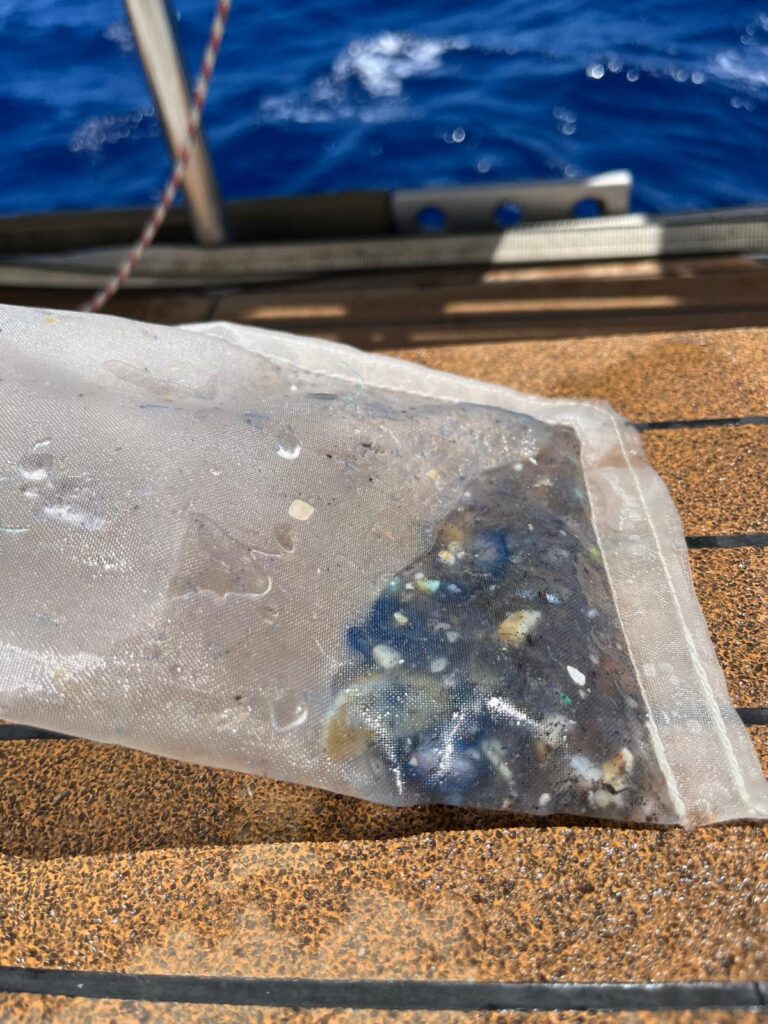
- Aggiramento il lato ovest dell’ anticiclone Nord Pacifico, con venti calanti in rotazione verso sud ovest, e successivamente nella parte superiore a nord ovest. E’ in questa rotazione oraria che gira la maggior parte della plastica scaricata dalle economie est asiatico e ovest nord america, si accumula negli anni in un sistema la cui evidenza (plastiche visibili e contenuto di miciro e mesoplastiche solo visivo/ photo 5-6 , nel campione da noi raccolto per il laboratorio Oceaneye) ci porta ad allargare le considerazioni sino ad ora fatte: la dimensione di questa altissima concentrazione ha, per dare un idea, la superficie dell’Africa intera. I campioni raccolti ed i report del protocollo Oceaneye verranno inviati nei laboratori di Ginevra per le analisi, e noi siamo fieri di essere in questa area per primi, apprezzando il grande lavoro che fa questa organizzazione. Oceaneye crea dati attendibili per coloro che potrebbero fare qualcosa per migliorare: una piccola organizzazione scientifica che crea e fornisce dati di grande valore, come riconosciuto anche dal Noaa https://www.ncei.noaa.gov/news/new-oceaneye-partnership-brings-expansion-microplastics-database
- La zona nord dell’anticiclone nord pacifico, ci porta sotto le Aleutine e la penisola dell’Alaska, tra le perturbazioni che si formano nel mare di Chukchi e scendono verso il Mare di Bering, le Aleutine ed il Golfo di Alaska. In questa area, nonostante la migliore stagione, passano metodicamente varie depressioni con il loro carico di vento. Il nostro obiettivo è Sand Point, un piccolo porto di pescatori, con arrivo previso al 2 Luglio. Poi saremo tra orsi, lupi, otarie, salmoni, king crab, balene.
Ciao
English version
The crossing of the Marquesas Islands Hawaii, also in the second phase was, from the wind sailing point of view, exceptional, 2100 miles in 12, 5 days, at more than 7 knots on average, and only one tuna caught. The arrival on the big island Hilo the land of volcanoes was greeted by a lava fountain more than 100 meters high, even if we only saw the glow in the night, in the following days with Michela she showed us her wonders, top the 4300 meters above sea level of the Mana Kea (photo1) and the super active Kila Uea. Then passages to Honolulu via Maui and Malokai.
The Waikiki Yacht Club, in downtown Honolulu (photo 2), hosted us for 10 days of repairs and maintenance for the preparation of the Hawaii-Aleutians, the most important stretch for our mission https://www.oceaneye.ch/en/ , with only one day of “vacation” at Pearl Harbor and its memorials.
On June 18th we set off, next stop Sand Point Aleutian Islands (Alaska), about 2200 miles to the North, meteorologically divided into 3 parts:
1) Departure tight slack with an excellent trade wind at the end of which the capture of a good Mahi Mahi cheered the crew. (photo 3 -4)
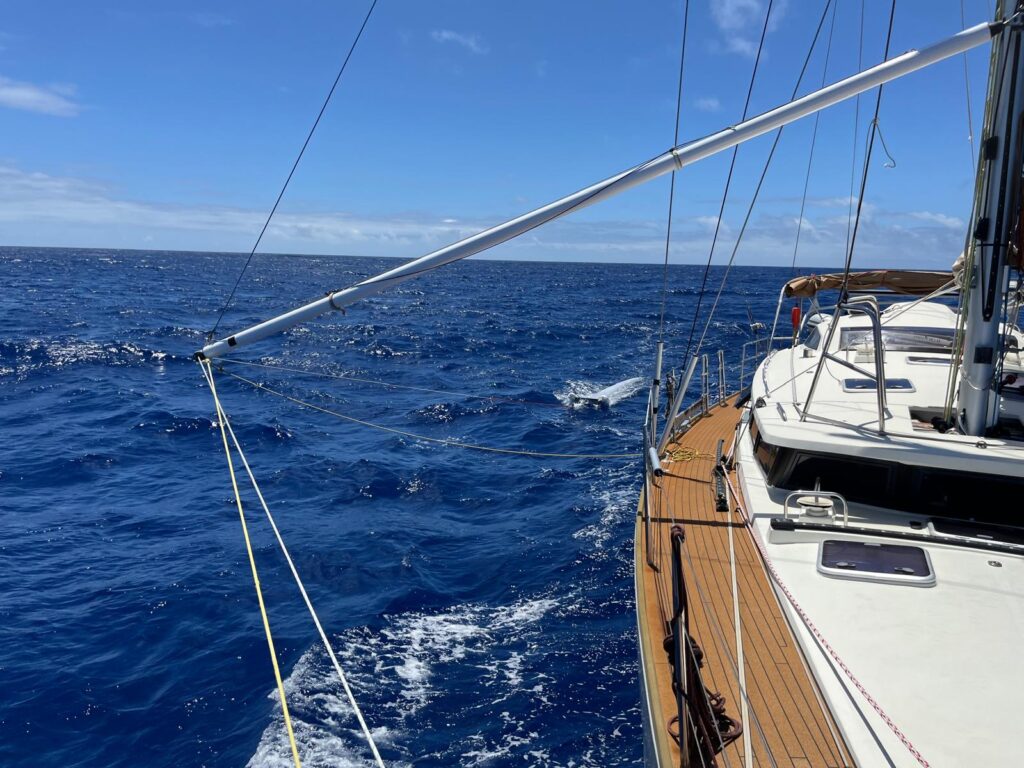
2) Circumventing the west side of the North Pacific anticyclone, with decreasing winds rotating towards the southwest, and subsequently in the upper part to the northwest. It is in this clockwise rotation that most of the plastic discharged by the East Asian and West North American economies rotates, accumulating over the years in a system whose evidence (visible plastics and only visual content of micro and mesoplastics / photo 5-6, in the sample collected by us for the Oceaneye laboratory) leads us to broaden the considerations made up to now: the size of this very high concentration has, to give an idea, the surface of the whole of Africa. The collected samples and the reports of the Oceaneye protocol will be sent to the laboratories in Geneva for analysis, and we are proud to be the first in this area, appreciating the great work that this organization does. Oceaneye creates reliable data for those who could do something to improve: a small scientific organization that creates and provides data of great value, as also recognized by Noaa https://www.ncei.noaa.gov/news/new-oceaneye-partnership-brings-expansion-microplastics-database
3) The northern area of the North Pacific anticyclone takes us under the Aleutians and the Alaska Peninsula, among the disturbances that form in the Chukchi Sea and descend towards the Bering Sea, the Aleutians and the Gulf of Alaska. In this area, despite the best season, various depressions pass methodically with their load of wind. Our goal is Sand Point, a small fishing port, with arrival scheduled for July 2. Then we will be among bears, wolves, sea lions, salmon, king crab, whales.
Bye