NWP 3 B Mare di Beaufort: Lotta/Trionfo/Disastro/Rinascita
English version below
Mare Beaufort: trionfale lotta di superamento della più grande massa di accumulo di ghiaccio vecchio degli ultimi 20 anni, che ha ritardato il nostro programma.
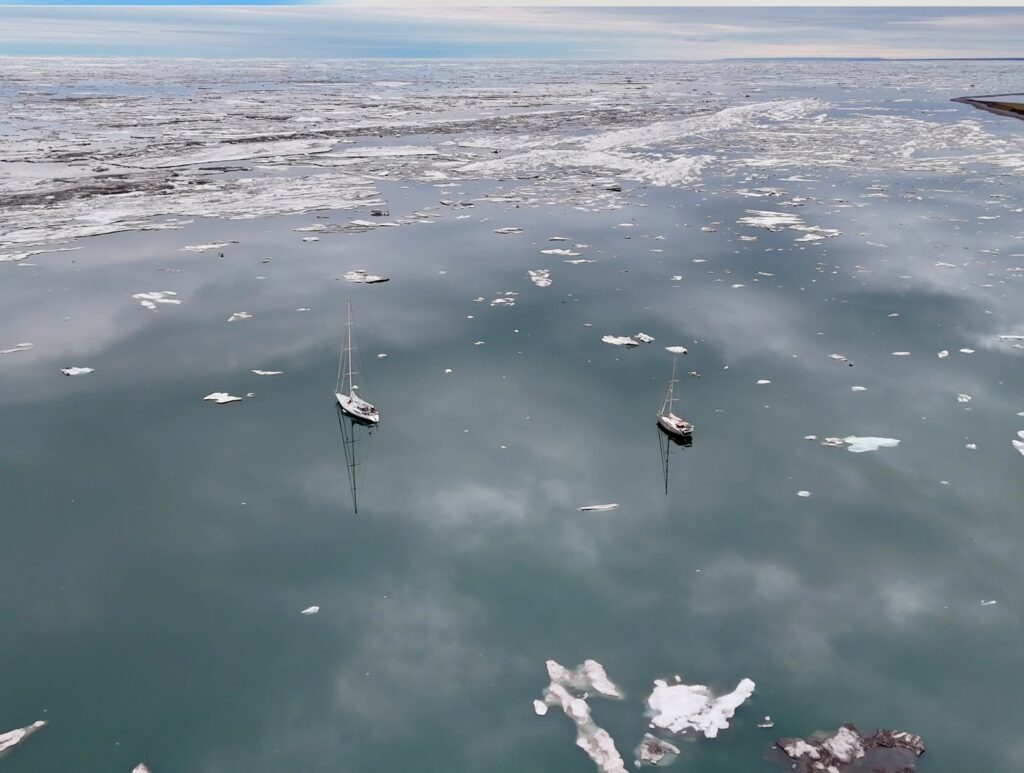
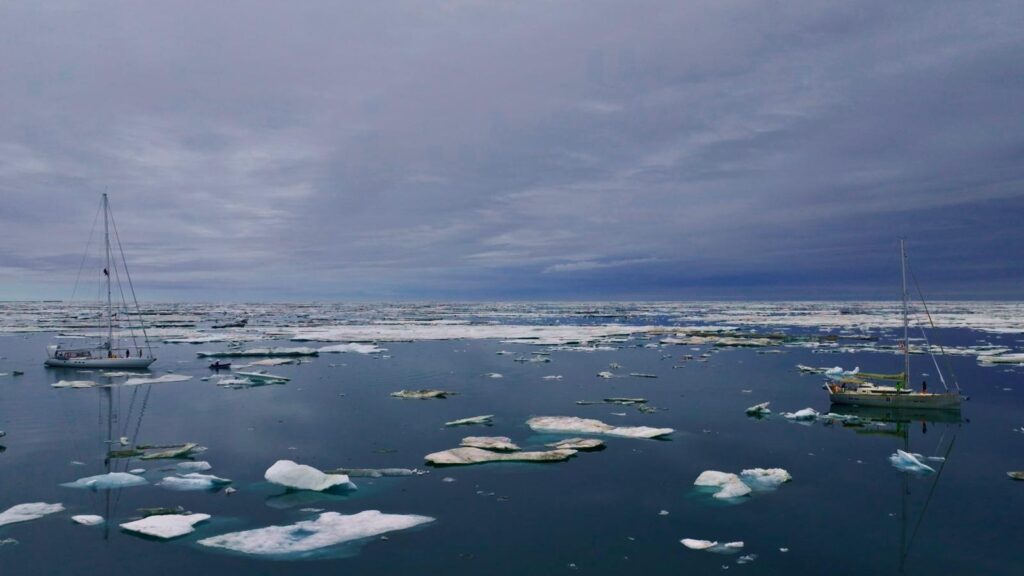
In avanscoperta rispetto al gruppo di 6 imbarcazioni da diporto che si sono appostate per affrontare il passaggio da Ovest a Est, Lifexplorer e i nuovi amici Spagnoli/ Messicani di Diablesse (una grande barca da 30 metri con Antonio capitano), dopo aver passato Barrow point ci sono subito gettati nell’ancora più intasato Mare di Beaufort in costante contatto radio e messaggi.
Dopo 5 giorni di lotta in squadra, tra sconfortanti banchise a volte in canali verso tentativi di apertura, con Carlos a riva sull’albero a 30 mt di Dablesse, a volte con Lifexplorer che cerca e guida in passaggi in costa sino a 3,5 mt di profondità vicino a spiagge nere, 6 ore di sonno in una pozza e poi 13 ore di tender di Diablesse in acqua e Livexplorer ad allargare spazi per il transito, finalmente acque più libere, Herschel Island a 15 miglia. Rilassati ed esaltati, stiamo superando la fase più difficile (dichiarato dalle previsioni solo il giorno prima 7su 10 di superficie ghiacciata), normalmente riservata ai rompighiaccio, per recuperare il tempo di attesa non prevedibile.
Lorenzo è al timone con Giovanni supporto, inspiegabilmente si distrae ed a velocità sostenuta centra un pezzo di ghiaccio di parecchie tonnellate, dopo l’urto iniziale e interminabili 5 secondi (tanto ci è voluto per balzare dal carteggio ove ero appena sceso al pozzetto) Lifexplorer è scivolato sopra sommergendolo con la chiglia e l’elica ancora in rotazione. La guardia attonita, e poi un profondo gelido silenzio, che uccide l’anima di che ha costruito questo progetto e di che pensa di averlo distrutto.
Una rapida verifica dei danni interni per identificare deformazioni ed eventuali vie d’acqua ed asse elica, non mostra nulla di anomalo.
All’esterno la situazione era demoralizzante la poppa era di una manciata di centimetri sollevata dalla sua naturale linea, il ghiaccio attraversava tutta la poppa sporgendo di un metro sul lato sinistro e dopo a poppa di anche di un metro i timoni erano bloccati saldamente incastrati ed appoggiati sul pezzo che ci dava extra galleggiabilità.
Tentiamo con tutte le nostre energie di spingere con il bastone con punta da ghiaccio, sembra saldato ed il suo galleggiamento ha una forza spropositata.
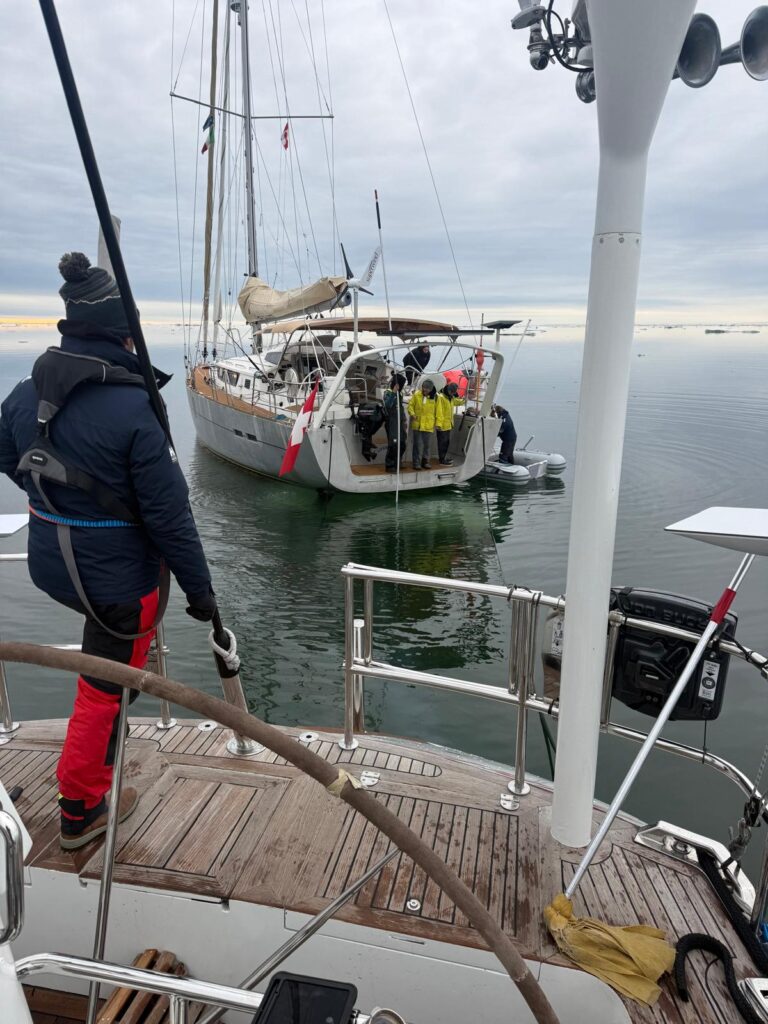
Chiamo Antonio di Diablesse che ci segue a 2 miglia, mettiamo il tender in acqua, ove è chiaro che
i timoni ci sono
solo il sinistro è parzialmente deformato 5/6 cm. dall’urto ed ha innescato una apposita area sacrificale per evitare lesioni allo scafo e non perdere la funzionalità.
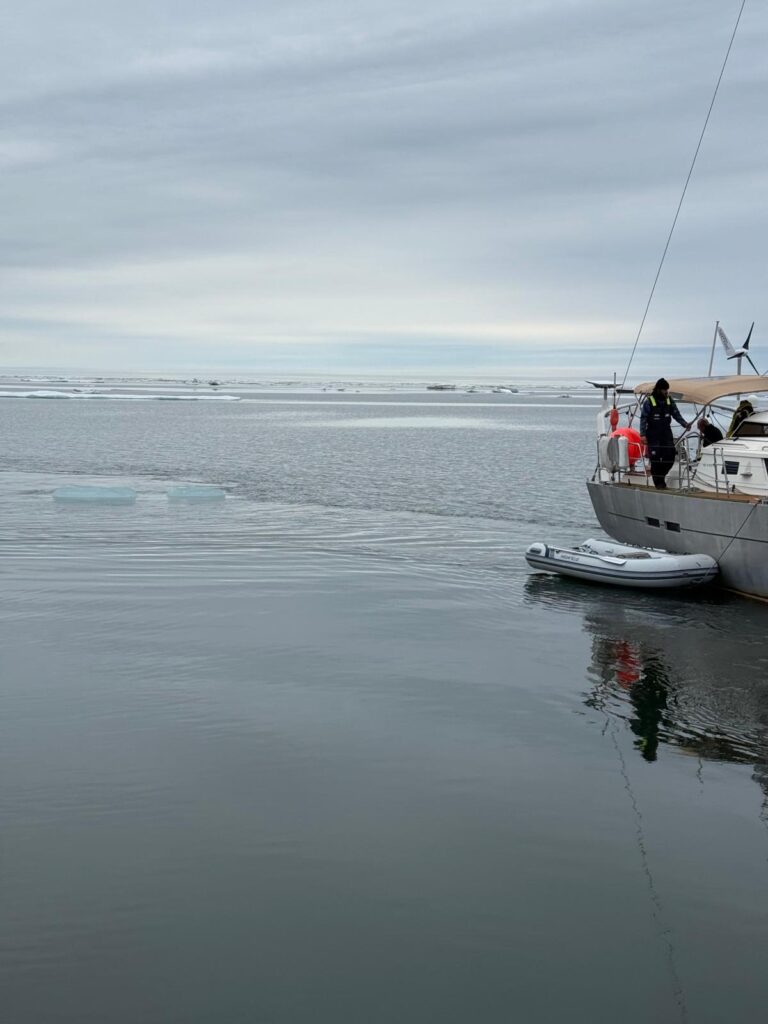
Dal tender con il supporto dell’equipaggio di Diablesse iniziamo a scalpellare con il nostro bel bastone da ghiaccio, il ghiaccio al margine del timone destro che sembra più vicino al bordo e più sottile, dopo una quindicina di minuti raggiungiamo il bordo, tentiamo un traino di poppa, nulla, invertiamo il traino da prua,
dopo un paio di minuti ad un paio di nodi di velocità, sulla sinistra si destabilizza e dopo pochi secondi scivola via.
Dal tender Carlos con una maschera intravede l’elica.
Giro i timoni…. Sembrano normali!
Riverifico asse elica, accendo il motore gira, si muove, ci spinge avanti ed indietro.!!
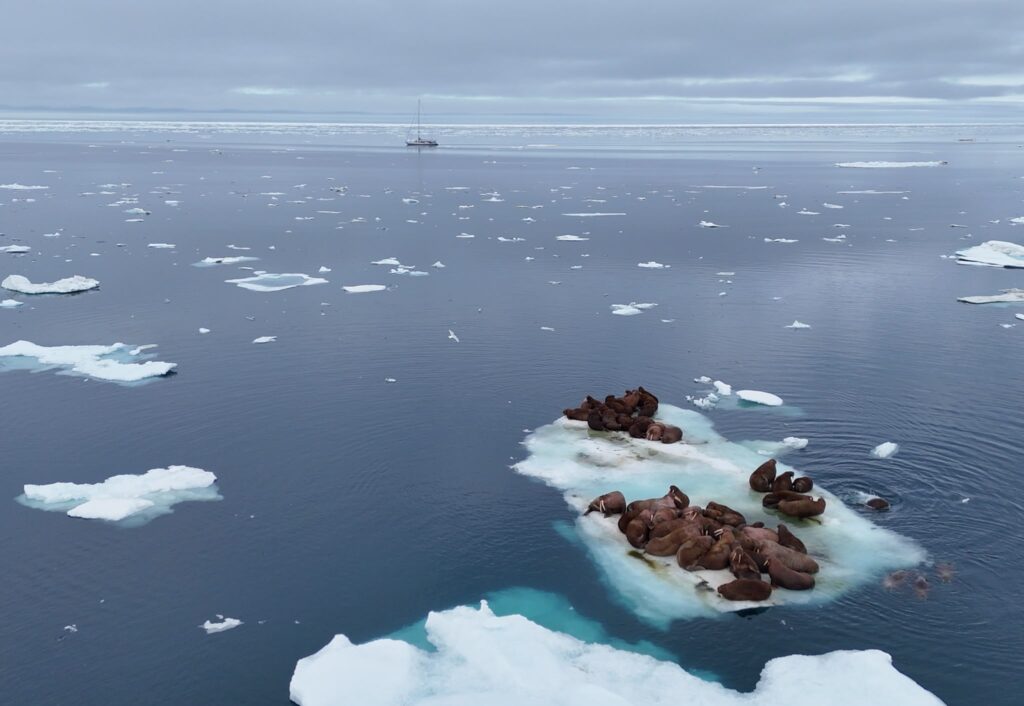
Grazie a chi ci ha protetto, ed anche a chi ha costruito Lifexplorer per rendere fattibile questi progetti.Grazie agli amici messicani spagnoli, per collaborazione, supporto e la bella foto dei trichechi.
La vita rinasce, seppur con un profondo buco di ansia che necessita di una notte di riposo e meditazione.
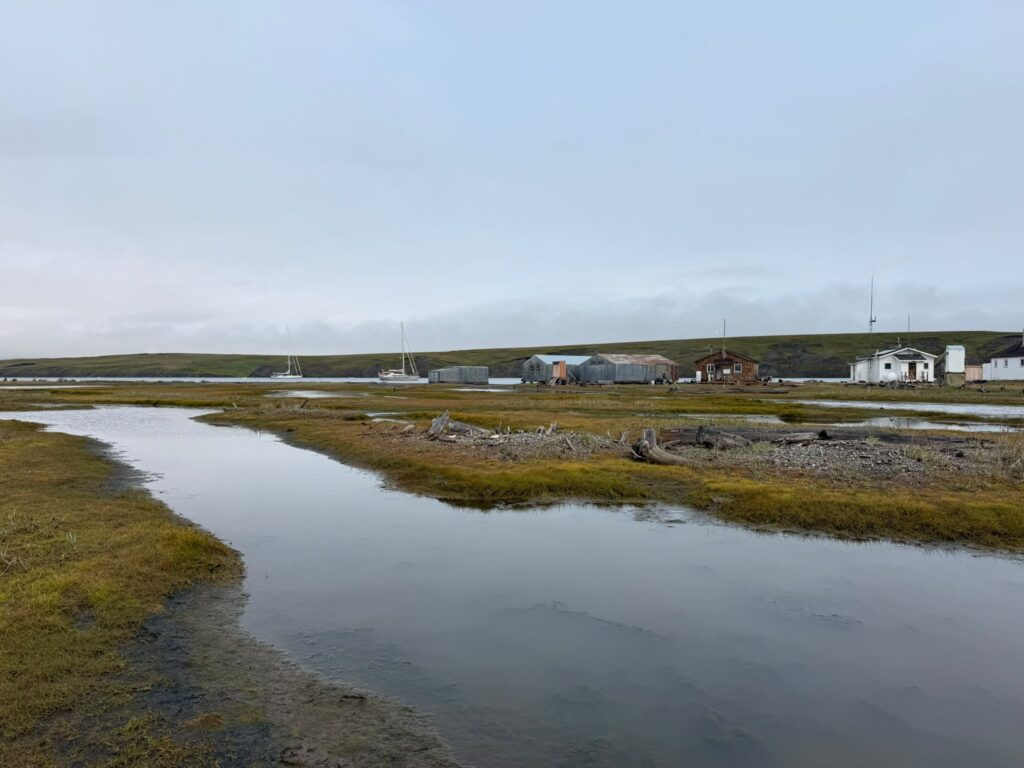
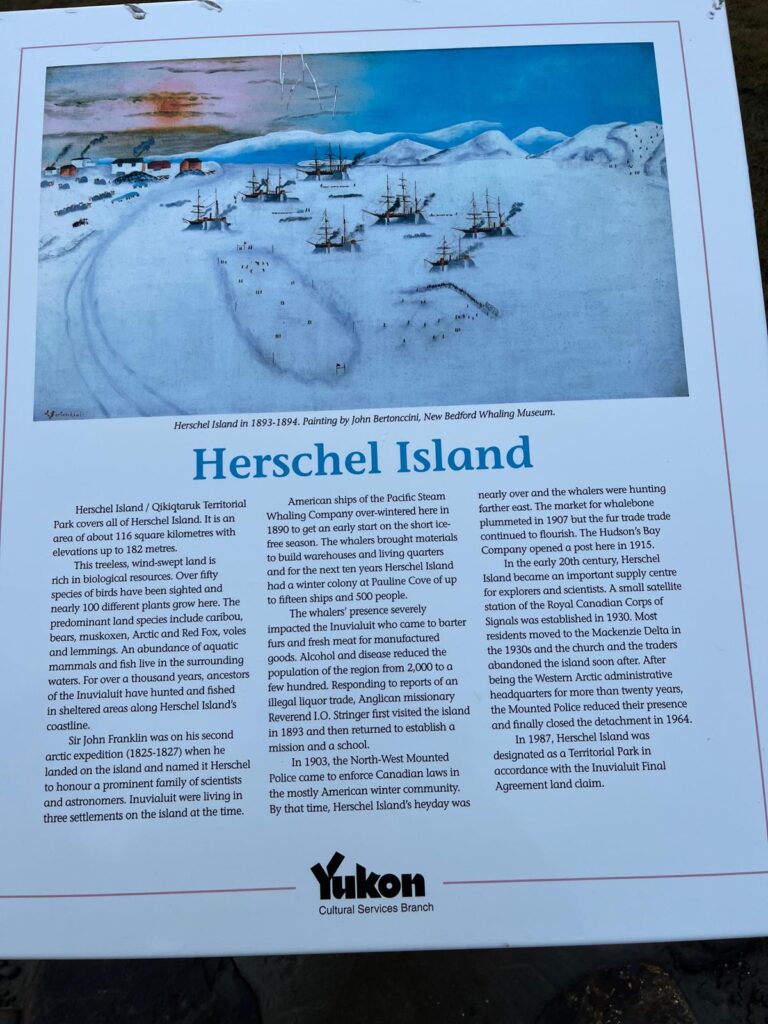
Rimandiamo a domani a pranzo la spaghettata alla carbonala di chef Giovanni con e su Dablesse, è troppo tardi stanchezza spossatezza e paure lo richiedono. Visita alla comunità scientifica di Herschel con le guide Inuit, niente visita degli Orsi bianchi locali. Poi subito bisogna ripartire per recuperare tempo e Tortello e Guido in Cambridge Bay
English version
Beaufort Sea: triumphant battle to overcome the largest accumulation of old ice in the last 20 years, which delayed our program.
Ahead of the group of six pleasure boats stationed to tackle the passage from West to East, Lifexplorer and our new Spanish/Mexican friends from Diablesse (a large 30-meter boat with Antonio as captain), after passing Barrow Point, we immediately plunged into the even more congested Beaufort Sea, in constant radio and message contact.
After five days of teamwork, amidst daunting ice floes, sometimes in channels, and attempts to break through, with Carlos ashore on the mast at 30 meters of Dablesse, sometimes with Lifexplorer searching and guiding coastal passages down to 3.5 meters near black beaches, six hours of sleep in a pool, and then 13 hours with Diablesse’s tender in the water and Livexplorer widening the passage, finally clearer waters, Herschel Island 15 miles away. Relaxed and exhilarated, we are overcoming the most difficult phase (the forecasts had declared 7 out of 10 ice surfaces just the day before), normally reserved for icebreakers, to make up for the unpredictable waiting time.
Lorenzo, at the helm with Giovanni as support, inexplicably gets distracted and, at high speed, hits a piece of ice weighing several tons. After the initial impact and an interminable five seconds (that’s how long it took me to leap from the chart table where I had just descended to the cockpit), the Lifexplorer slid over, submerging it with its keel and propeller still spinning. The watchman is stunned, and then a deep, icy silence, killing the soul of the person who built this project and who thinks he destroyed it.
A quick check of the internal damage to identify deformations and any water ingress and the propeller shaft shows nothing abnormal.
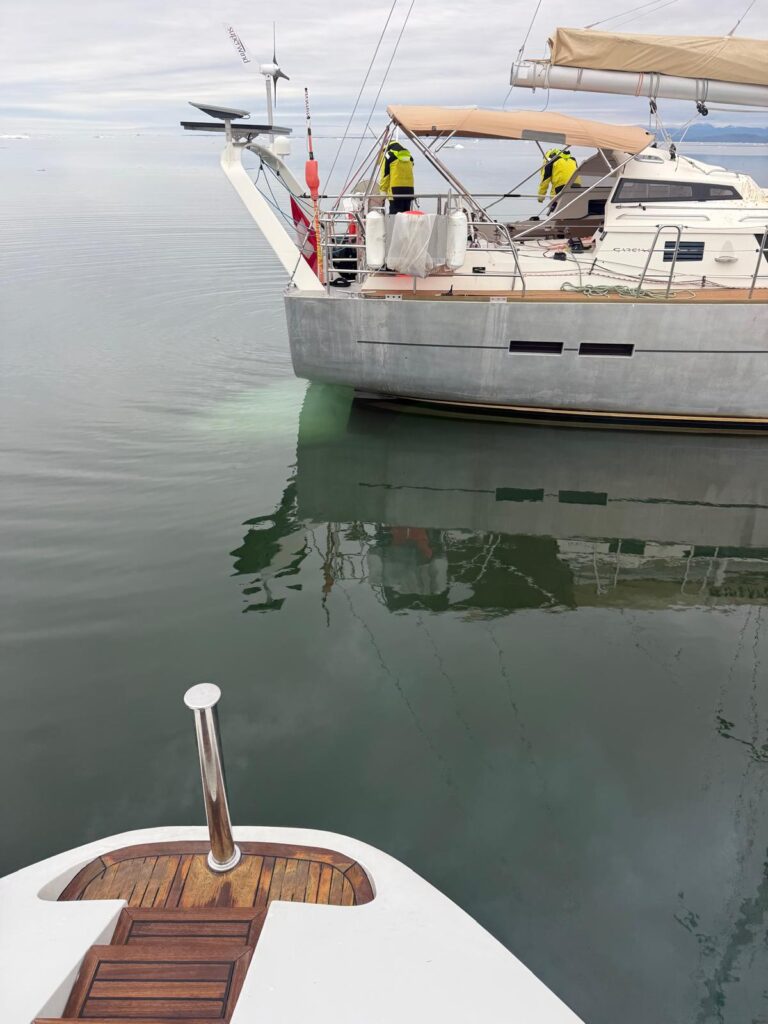
Outside, the situation was demoralizing: the stern was raised a handful of centimeters from its natural line, the ice crossed the entire stern, protruding a meter on the port side, and after another meter further aft, the rudders were locked firmly in place and resting on the piece that gave us extra buoyancy.
We try with all our energy to push with the ice-tipped pole; it seems welded, and its buoyancy has disproportionate force.
I call Antonio from Diablesse, who is following us at two miles, and we put the tender in the water, where it is clear that
the rudders are there.
Only the left one is partially deformed by 5-6 cm from the impact, triggering a special sacrificial area to prevent damage to the hull and maintain functionality.
From the tender, with the support of the Diablesse crew, we begin chiseling away with our nice ice pole at the edge of the right rudder, which seems closer to the edge and thinner. After about fifteen minutes, we reach the edge. We attempt a stern tow, but nothing, we reverse the bow tow.
After a couple of minutes at a couple of knots, the port rudder destabilizes and after a few seconds it slips away.
From the tender, Carlos, with a mask, glimpses the propeller.
I turn the rudders… They seem normal! I check the propeller shaft again, start the engine, it turns, it moves, it pushes us forward and backward.!!
Thanks to those who protected us, and also to those who built Lifexplorer to make these projects possible.Thanks to our Mexican and Spanish friends for their collaboration, support, and the beautiful photo of the walruses.
Life is reborn, albeit with a deep pit of anxiety that requires a night of rest and meditation.
We postpone Chef Giovanni’s spaghetti carbonala with and on Dablesse until tomorrow for lunch; it’s too late, tiredness, exhaustion, and fears demand it. A visit to the Herschel scientific community with the Inuit guides, but no visit to the local polar bears. Then we have to leave immediately to make up for lost time and Tortello and Guido in Cambridge Bay.